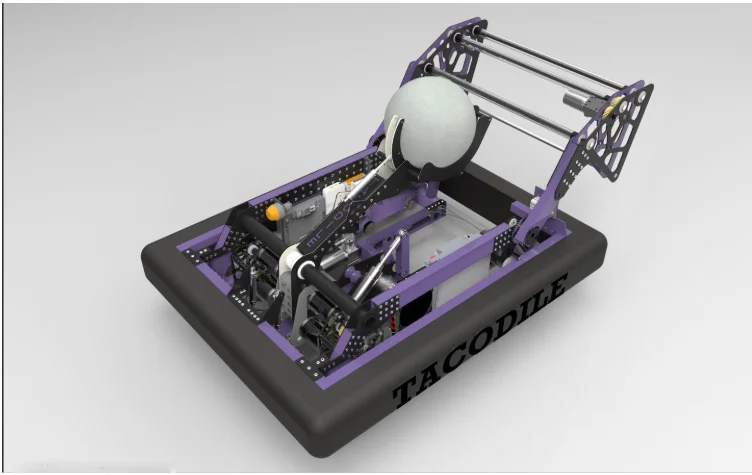
SHOOTING MECHANISMS
Flywheel Shooters
A flywheel shooter consists of one or more flywheels spinning at speeds up to several thousand RPM. When a game element contacts the flywheel, it is accelerated until it leaves the shooter mechanism.
1. OPTIMIZING THE FLYWHEEL
As a game element passes through a flywheel shooter, the flywheel experiences a drop in speed (deceleration). If the flywheel slows down too much, subsequent shots may become inaccurate if the motor lacks sufficient time to recover its speed.
Strategy: Increasing Moment of Inertia
To ensure consistent rapid-fire performance, a common approach is to increase the moment of inertia:
$$\tau = I \cdot \alpha$$
(Torque equals moment of inertia multiplied by angular acceleration)
When the moment of inertia ($I$) increases, the angular acceleration ($\alpha$) decreases—meaning the speed fluctuation of the flywheel is reduced.
Additionally, moment of inertia is directly proportional to mass and the square of the radius of gyration.
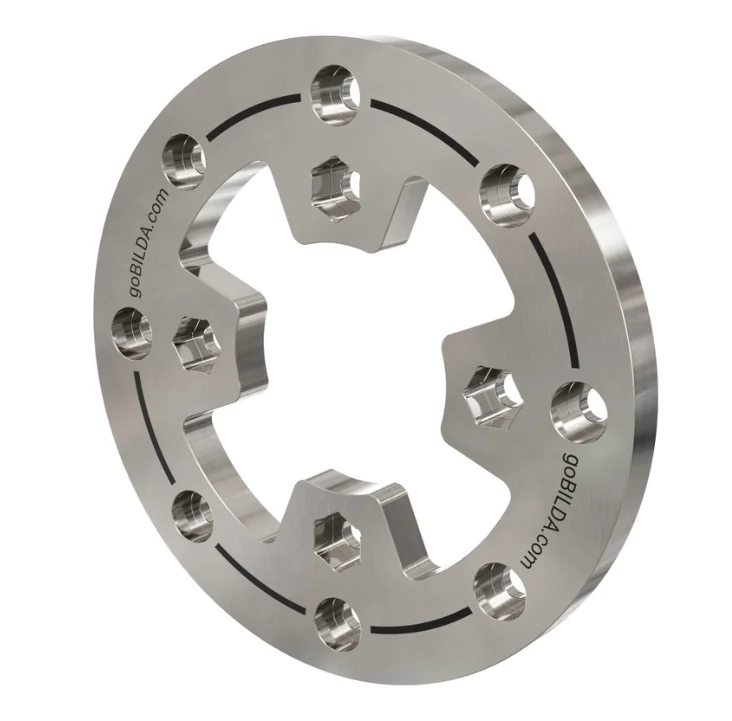
Because of this, teams often attach weighted metal plates with mass concentrated at the outer rim; some teams add an extra 300g–500g. It is recommended to test shooting performance with various weight increments to find the most stable configuration.
2. CLASSIFICATION OF FLYWHEELS
Single Flywheel Shooter (Hooded Flywheel)
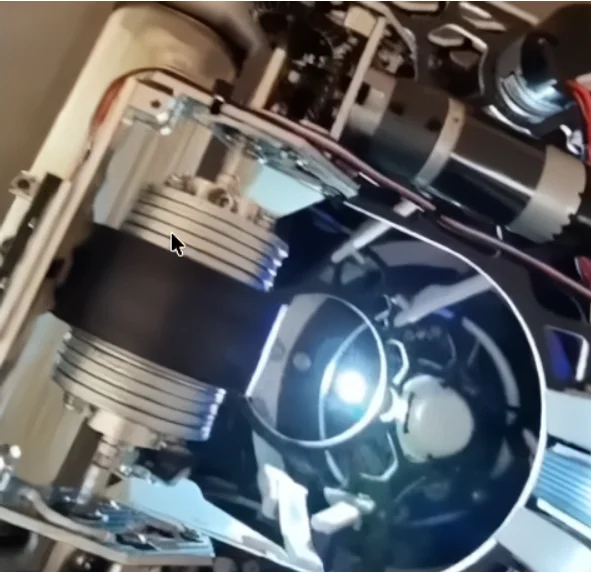
- Consists of a spinning shooter wheel and a hood (ramp/trough).
- The game element is compressed between the wheel and the hood to gain acceleration. Depending on the game element, the required compression can come from the wheel itself, the compressibility of the element, or the hood.
- Single flywheel shooters are typically compact. You can adjust shots by changing wheel speed or hood geometry. A hood that wraps further around the wheel creates a flatter trajectory but also introduces more friction, making the shot slightly weaker.
Dual Flywheel Shooter
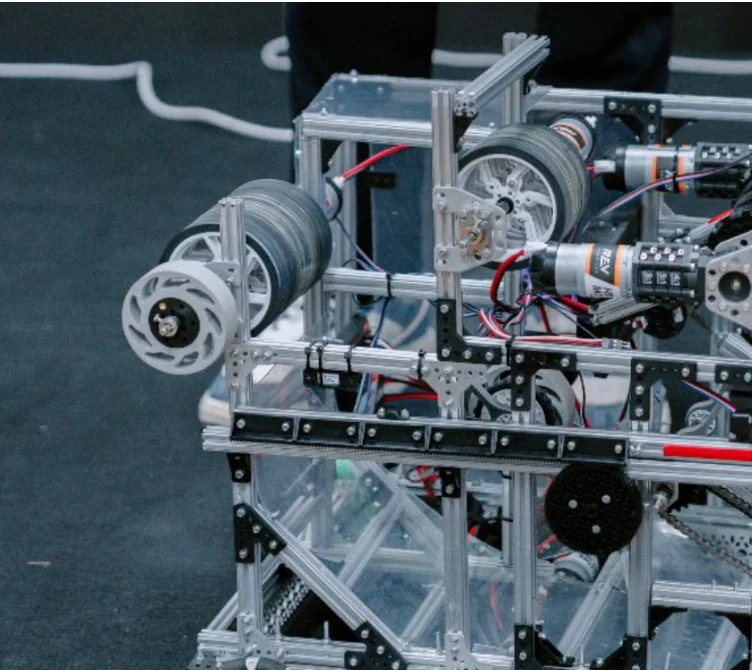
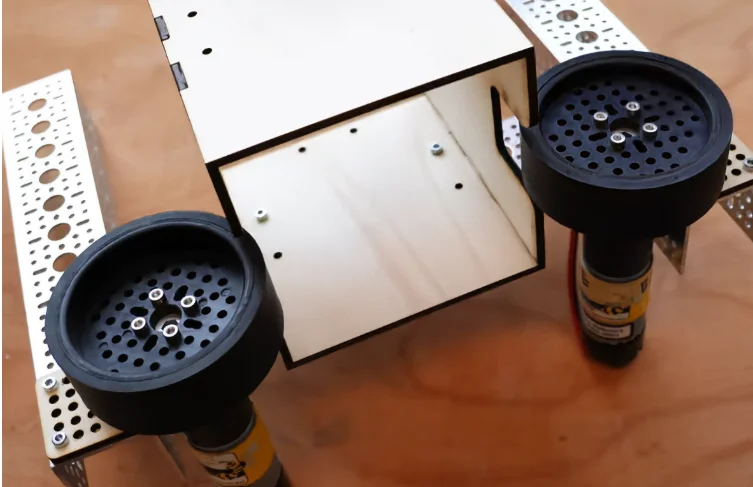
- Consists of two flywheels spinning in opposite directions, with the game element passing through the center between them. Like single flywheel systems, compression is required to accelerate the element.
- Care must be taken with the power transmission design to ensure both wheels run at identical speeds, which ensures a stable projectile trajectory.
- Can be arranged in either a horizontal or vertical orientation.
3. CATAPULT SHOOTERS
Catapult-style shooters are well-suited for game elements with inconsistent compressibility, because catapults do not rely on compression to accelerate objects. They can also handle irregularly shaped objects that flywheel systems cannot process.
There are various release mechanisms for catapults, such as pneumatic cylinders, sliding gears, falling cams, or choo-choo linkages.