
DRIVETRAINS IN FTC ROBOTICS
1. INTRODUCTION TO DRIVETRAINS
The drivetrain is a fundamental system that enables a robot to move, playing a decisive role in its overall functionality and layout. There are several types of drivetrains in FTC, broadly categorized into two main types: Tank and Holonomic. Today, we will explore Tank Drivetrains first.
Why is the Drivetrain Important?
A drivetrain directly impacts:
- Robot mobility and maneuverability
- Match performance and strategy
- Overall design and layout of mechanical modules
- Obstacle-clearing capability
- Control programming complexity
2. TANK DRIVETRAIN
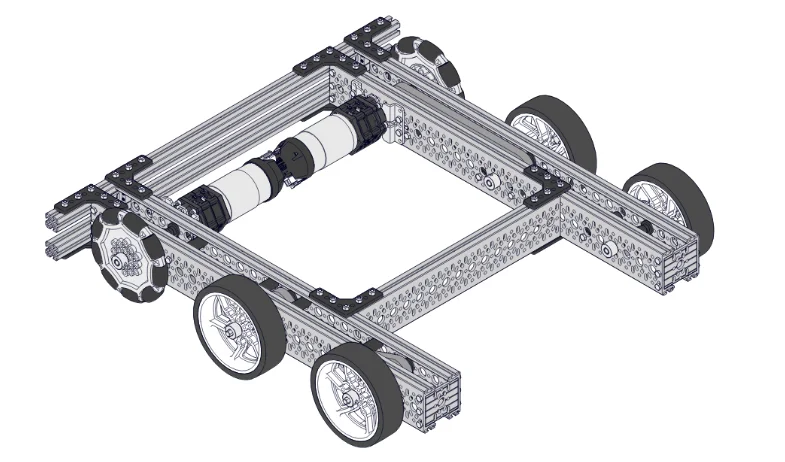
A Tank Drivetrain primarily uses traction wheels and cannot move sideways. To change direction, this system relies on spinning the left and right sides in opposite directions to turn the robot in place, or running one side faster than the other to make the robot travel in an arc.
- Key Characteristics of Tank Drivetrain:
- Prioritizes traction and acceleration over pure agility.
- Helps the robot climb over field obstacles better.
- Simple control and easy to program.
- Low cost, easy to build and maintain.
- Simple and robust mechanical structure.
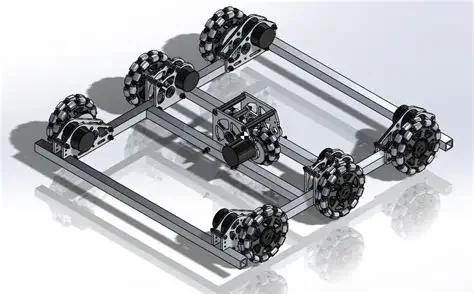
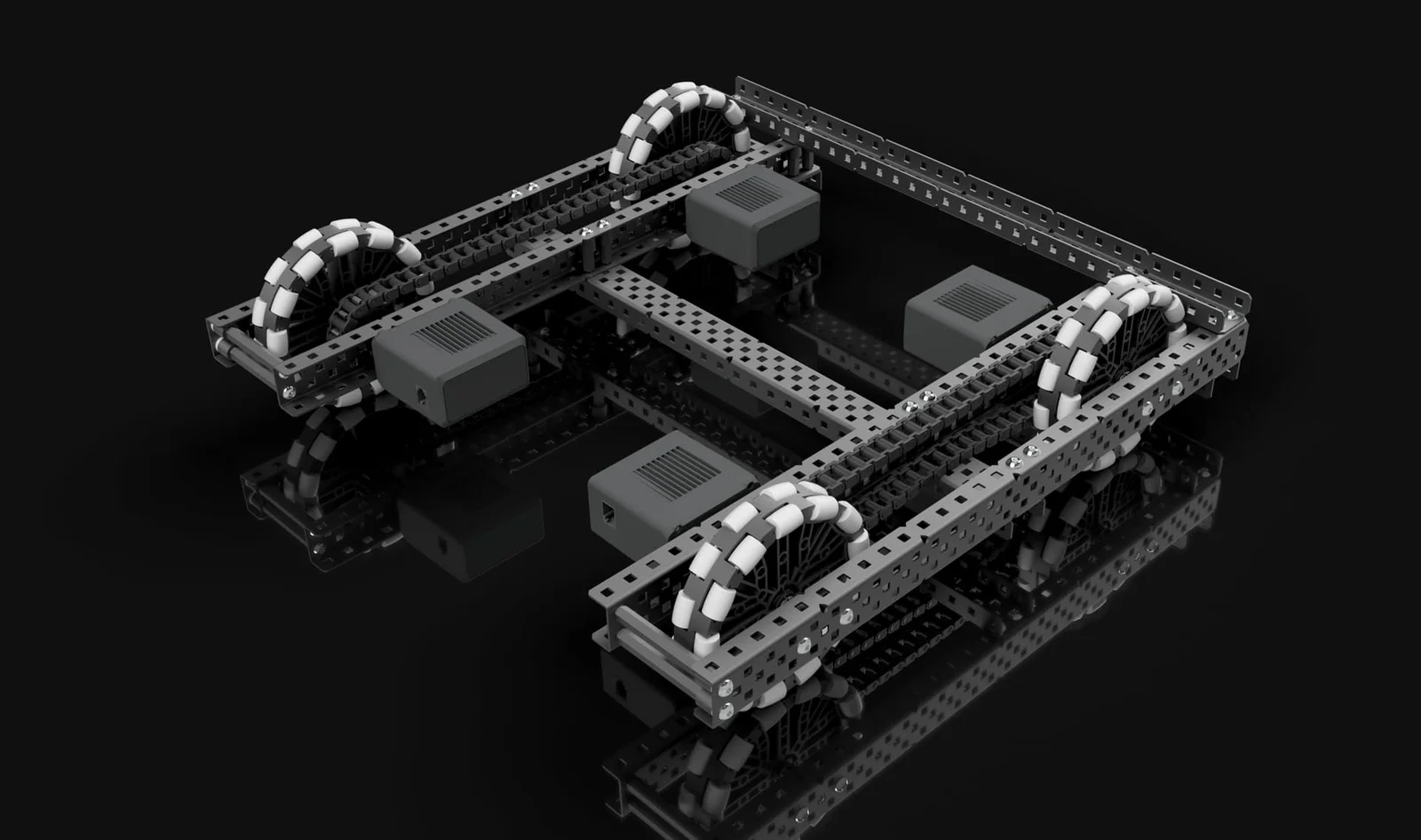
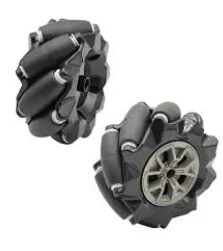
3. COMMON WHEEL TYPES

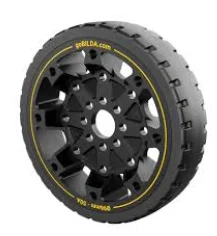
4. POWER TRANSMISSION MECHANISMS
Choosing a Transmission Mechanism
There are four primary choices: direct drive, chain drive, gear drive, and belt drive.
CRITICAL NOTE:
Direct drive should be avoided, because motor gearboxes break easily under impact loads (e.g., when a wheel slams into a wall or gets rammed by another robot).
5. DRIVETRAIN SELECTION & DESIGN GUIDE
When choosing and designing a drivetrain, evaluate field layouts and competition requirements against the following factors:
- Agility: Determined by factors like max speed, acceleration, turning radius, rotation rate, or lateral movement capability.
- Pushing Power: The robot should have enough force to traverse the field fluidly and clear obstacles when necessary.
- Budget: Tank drivetrains with standard wheels are typically much cheaper than Holonomic systems using Mecanum/Omni wheels.
- Team Experience: Beginner teams should start with a simple Tank drivetrain; experienced teams can tackle Holonomic setups.
- Transmission Mechanism: Choose between chains, gears, or belts based on durability, efficiency, and cost targets.
- Testing & Optimization: Always prototype and test multiple times to find the optimal solution for a specific season.
- PRACTICAL INSIGHTS FROM FTC TEAMS:
- Tank Drivetrain Dominance: Roughly 70–80% of FTC teams use Tank drivetrains due to high reliability and low cost.
- Mecanum Popularity Among Top Teams: Top-tier teams frequently use Mecanum drivetrains to maximize strategic mobility.
- Optimal Gear Ratios: A 10:1 to 20:1 ratio is most common in FTC, balancing speed and pulling torque.
- Always Have Spares: Keep spare chains/gears and repair tools ready in the pit.