
MechanicalNov 10, 2026RoboLads Engineering Unit
LINKAGE MECHANISMS IN ROBOTICS
SPECIFICATION & TECHNICAL NOTES
OVERVIEW OF LINKAGES
A linkage is a mechanism consisting of assemblies of rigid bars connected by pivot joints. Most linkage mechanisms consist of rigid links connected by pivot joints and driven by input from motors or pneumatic cylinders to produce complex motions.
Linkage mechanisms are classified into the following types:
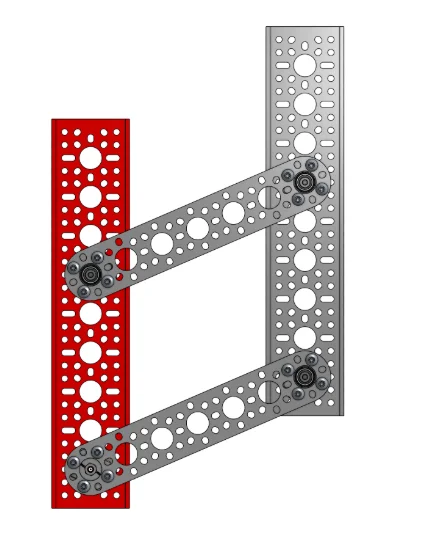
1. Four-Bar Linkage
- The simplest closed-loop motion mechanism.
- Typically used in parallel configurations; requires maintaining precise center-to-center distances between joints.
- Can create various types of motion, though rarely used in competition.
- Application: Rarely used in competition.
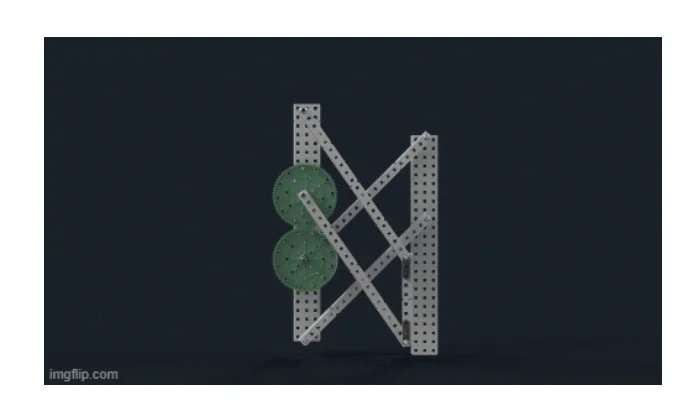
2. Double-Reverse Four-Bar Linkage
- Two parallel four-bar mechanisms arranged in opposing directions; gears help provide simultaneous lifting.
- Disadvantages:
- Heavy
- Many components
- Space-consuming
- High vibration
- Application: Specialized lifting systems.
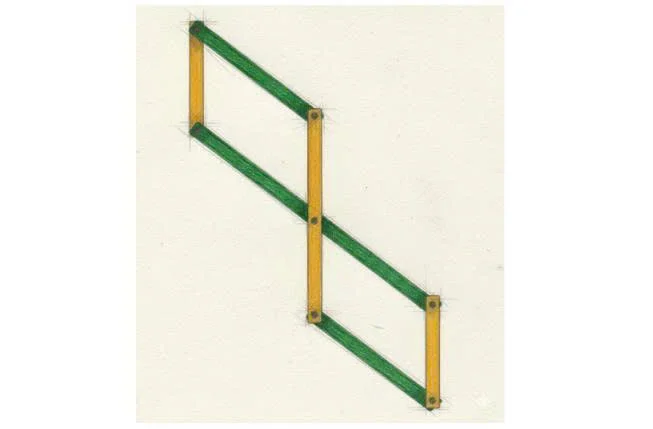
3. Six-Bar Linkage
- Two four-bar mechanisms stacked on top of each other, sharing two links to form a six-bar mechanism.
- Can be expanded into n-bar mechanisms.
- Application: Complex mechanisms.
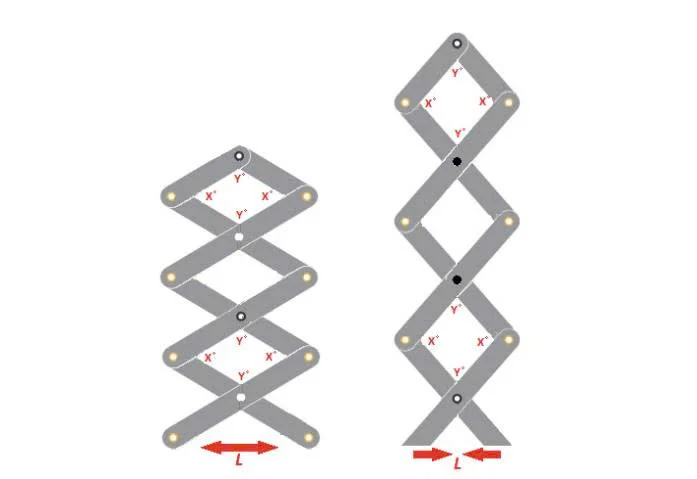
4. Scissor Linkage
- Produces linear motion but is extremely heavy, complex, difficult to control, and suffers from high vibration.
- Generally not recommended for competition; suitable only for heavy-duty industrial equipment.
- Application: Heavy-duty industrial equipment.
Verified by FTC 31113 Technical LeadID: 6b0e15d2-15c8-4032-8375-9e30c859221a