
MANUFACTURING METHODS: 3D PRINTING VS. CNC
OVERVIEW OF MANUFACTURING METHODS
"In engineering in general and robotics in particular, 3D printing is one of the most widely used manufacturing methods due to its flexibility and convenience. With various printing technologies and materials available, 3D printing can produce components that meet specific requirements, such as precision, durability, and surface quality."
In addition to 3D printing, traditional manufacturing methods such as CNC machining also play an important role in producing robotic components with high precision and excellent mechanical strength. This article will provide a detailed comparison of these two popular manufacturing methods in robotics.
1. 3D PRINTING - ADVANCED MANUFACTURING TECHNOLOGY
1.1 FDM (FUSED DEPOSITION MODELING)
The Most Common 3D Printing Method
FDM is a 3D printing technology that heats thermoplastic filament and extrudes it through a nozzle to build objects layer by layer. It is one of the most widely used 3D printing technologies in FTC and other robotics competitions. Some popular manufacturers include Bambu Lab, Creality, Flashforge, and Elegoo.
Recommended 3D Printers for Beginners: Bambu Lab A1, Bambu Lab A1 Mini, Elegoo Centauri Carbon, Creality Ender 3 V3 SE, Creality Ender 3 Pro, etc.
Bambu Lab A1 3D Printer
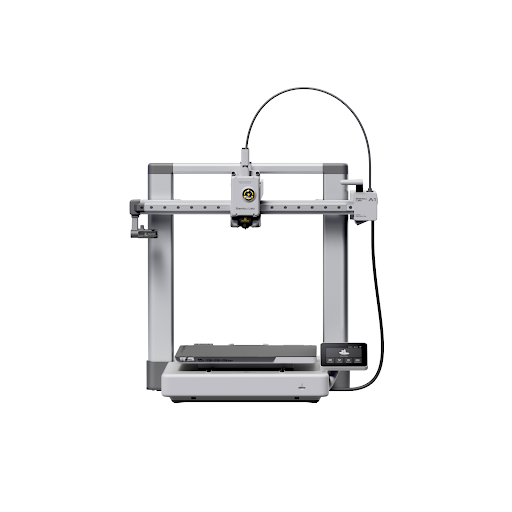
High-speed FDM 3D printer with user-friendly features.
Creality Ender 3 Pro 3D Printer
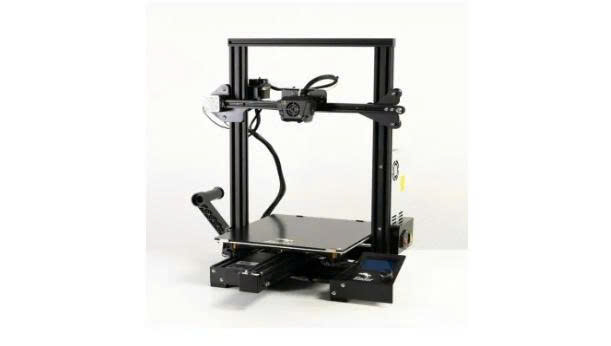
Popular and affordable FDM 3D printer.
1.2 OTHER 3D PRINTING TECHNOLOGIES
SLA (Stereolithography)
SLA is a 3D printing technology that uses a laser to cure layers of liquid photopolymer resin. It is commonly used to produce highly detailed components with smooth surface finishes and extremely thin layers.
SLS (Selective Laser Sintering)
SLS is a 3D printing technology that uses a laser to fuse powdered polymer materials, typically nylon, into solid components. This method produces durable parts with excellent mechanical properties.
DMLS (Direct Metal Laser Sintering)
DMLS is a metal additive manufacturing technology that uses a laser to fuse metal powder into solid components. It is widely used in industrial metal 3D printing, although it is less accessible and less common in Vietnam due to its high equipment and operating costs.
2. CNC - PRECISION MACHINING
In addition to 3D printing, CNC machining is another manufacturing method used in FTC robotics. CNC (Computer Numerical Control) machines use computer-controlled cutting tools to shape materials into precise components.
2.1 CNC ROUTER
CNC routers are among the most versatile and useful machining tools. Most CNC routers operate on three axes (X, Y, and Z), allowing them to perform 2D cutting, partial-depth milling, and certain types of 3D machining.
Since CNC routers use rotating cutting tools, internal corners generally cannot be perfectly sharp 90-degree corners. Instead, they must have a radius determined by the cutting tool, which should be considered during the CAD design process.
3-Axis CNC Router
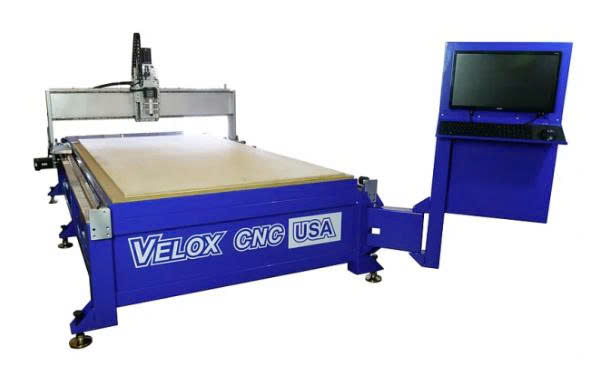
Standard 3-axis CNC router.
2.2 LASER CUTTER
CNC laser cutters use focused laser beams to cut various materials with high precision. Depending on the type of laser and machine configuration, they can process materials such as thin wood, cardboard, acrylic, and certain metals, including aluminum with suitable equipment.
Laser cutting is particularly useful for rapid prototyping and manufacturing flat components, such as mounting plates and structural panels for competition robots.
CNC Laser Cutter
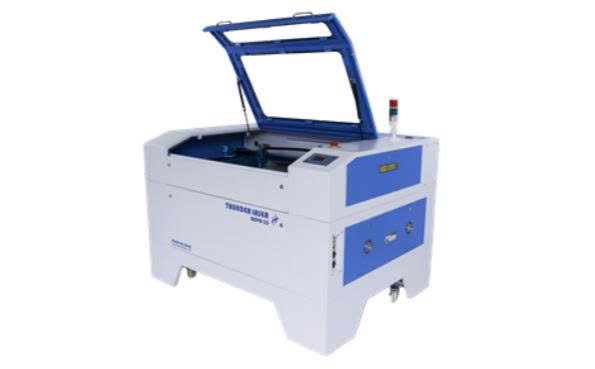
CNC laser cutting machine.
2.3 WATER JET CUTTER
Water jet cutters typically operate on two axes, although advanced machines can support up to five axes.
These machines use high-pressure water, often mixed with abrasive particles, to cut a wide range of materials, including metals, plastics, glass, and stone.
Water jet cutting can process relatively thick materials, sometimes reaching several tens of centimeters depending on the machine, material, and cutting requirements.
Water Jet Cutter
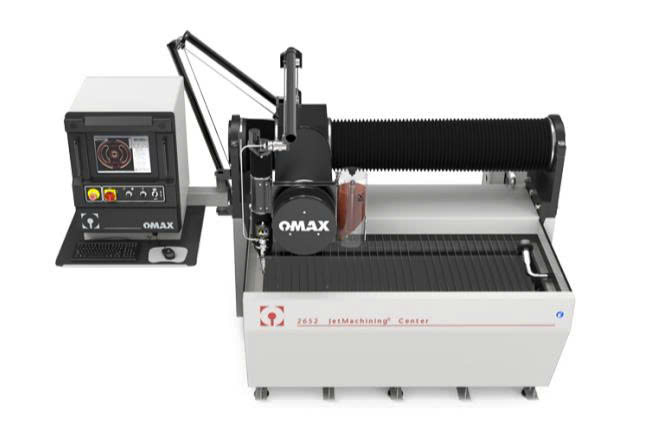
Industrial water jet cutting machine.
2.4 MILLING MACHINE
Milling machines operate on principles similar to CNC routers but are generally designed with greater structural rigidity, allowing them to achieve higher precision when machining demanding materials such as metals.
They can manufacture complex three-dimensional components using rotating cutting tools. Some advanced CNC milling machines feature four or five axes, enabling the machining of intricate geometries from multiple directions.
Industrial Milling Machine
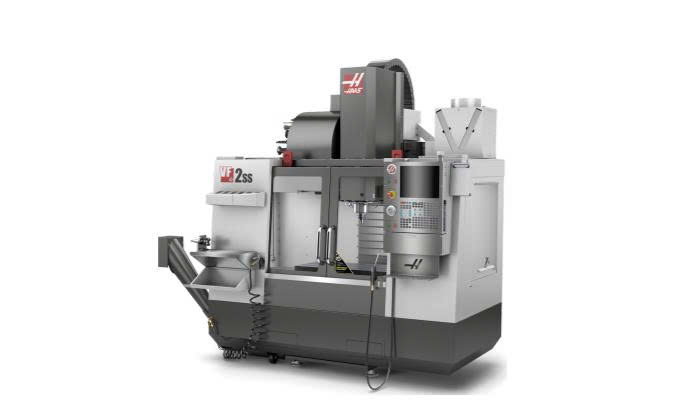
Industrial milling machine.
2.5 LATHE
Unlike most other machining methods, lathes primarily shape rotationally symmetrical components by rotating the workpiece against a cutting tool.
They are commonly used to manufacture cylindrical parts such as shafts, bushings, spacers, and threaded components.
Advanced CNC lathes with additional tooling can also perform more complex machining operations.
CNC Lathe
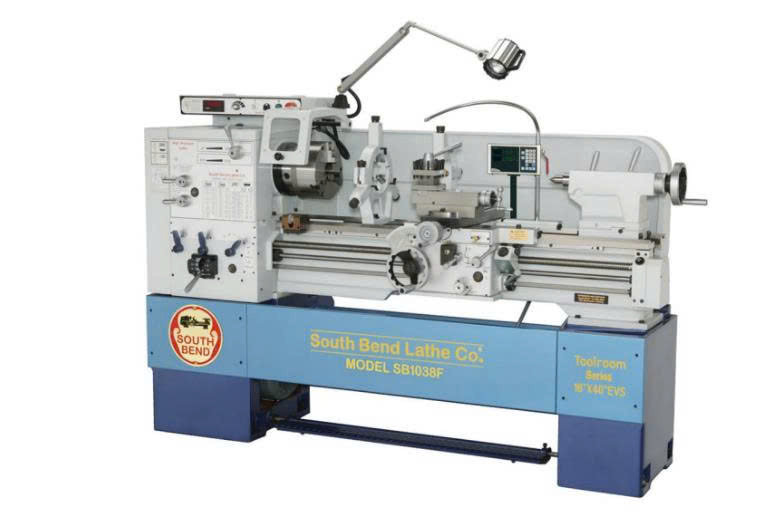
CNC turning machine.
3. COMPARISON BETWEEN 3D PRINTING AND CNC MACHINING
"Each manufacturing method has its own advantages and disadvantages. Choosing the most suitable method depends on the component's requirements, budget, available time, and technical expertise."
COST
3D Printing
Generally affordable, especially for small-scale prototyping and low-volume production.
CNC Machining
Typically more expensive due to equipment, tooling, and machining requirements.
EASE OF USE
3D Printing
Relatively easy to learn and operate, making it suitable for beginners.
CNC Machining
Generally more difficult to learn and requires greater knowledge of machining processes, tool selection, and safety procedures.
PRECISION
3D Printing
More prone to dimensional inaccuracies, depending on the printing technology, material, and settings.
CNC Machining
Generally offers higher dimensional accuracy and tighter tolerances.
MECHANICAL STRENGTH
3D Printing
Common thermoplastic materials may have limited mechanical strength, particularly between printed layers.
CNC Machining
Can produce strong and durable components from metals and other engineering materials.